THE PRODUCTION NOTEBOOK
Custom Flocking on Mesh for Gothic & Alternative Brands
Metrodress is a gothic and alternative clothing manufacturer with custom pattern flocking capability. We work with brands on their own artwork, motif scale and mesh selection, bringing a textured design detail into garment development and production.
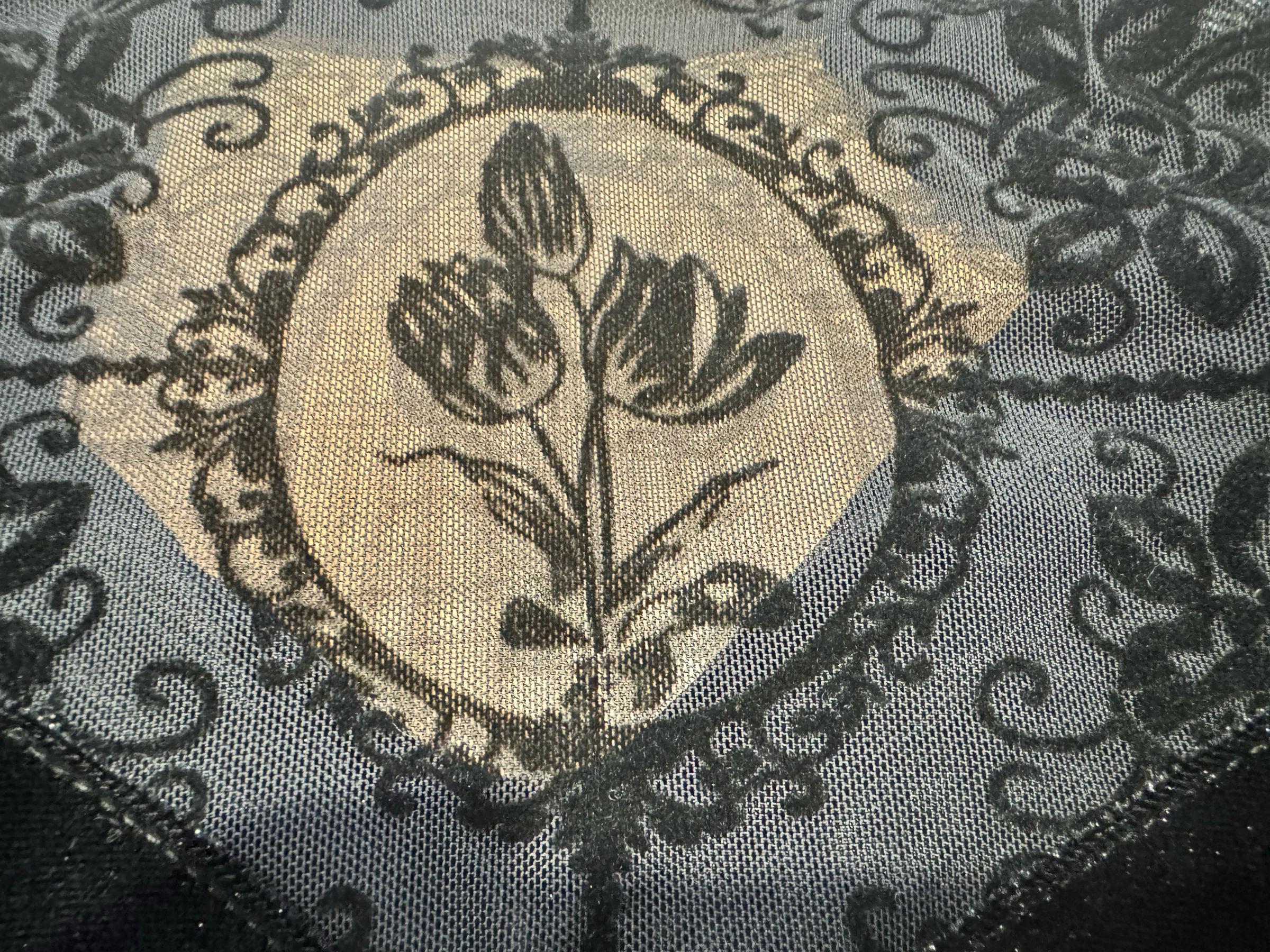
A closer look at patterned flocking
The fabric photograph shows black floral and ornamental scrollwork motifs on an open mesh ground. The contrast comes from both the pattern and the surface: the flocked areas have a raised, velvet-like texture, while the spaces between them retain the sheer character of the mesh.
Flocking applies short fibres to an adhesive-coated surface. For a clothing brand, that creates another way to express an original motif through texture as well as colour. The photograph is a close-up of the material detail; it helps you discuss the effect you want for a new garment.
Develop a flocked pattern from your own artwork
We can develop custom flocked patterns for your brand's garment designs. Start with your original artwork or a clearly annotated design brief. Tell us which features define the design, the intended motif dimensions and whether the pattern should repeat across the fabric or sit in a particular garment area.
Floral motifs, ornamental lines or other artwork each need a clear scale and layout. Fine lines, small enclosed shapes and the spaces between motifs should be reviewed on the actual mesh during sampling. Adjusting the artwork at this stage can help retain the design's character in the flocked finish.
If the artwork is still being developed, send the current version and identify the decisions that remain open. We can discuss the pattern and garment requirements together before the sample brief is finalised.
Choose the mesh and flocked finish together
A flocked motif and its base fabric need to work together. The mesh's openness, stretch and hand feel affect the garment's appearance and the way the pattern looks when worn. Specify the intended transparency and any lining or underlayer, alongside the flock colour and surface effect you want.
During sample review, look at the motif edges, the open areas between shapes and the fabric's feel. For a fitted mesh garment, also review how the design appears when the fabric stretches and where seams interrupt the pattern.
Adhesive selection, application and curing conditions affect the final finish. Agree the project's care requirements and relevant checks during development, then assess a sample made with the intended materials before approving production.
Bring the pattern into a garment sample
Show the design on front and back garment drawings. Mark where motifs should sit at the neckline, sleeves, body panels and hem, and identify any areas where alignment matters. A repeat layout and a deliberately positioned motif require different approval references.
Use the garment sample to review pattern scale alongside fit, coverage and construction. Record any changes with a photograph, the affected location and the desired result. Keep the approved artwork version and material reference together with the garment specification.
Our flocked mesh top case study shows a separate Metrodress bulk garment project and its washing observations. For a new custom pattern, the sample and agreed checks provide the reference for that project.
What to send for a custom flocking enquiry
Share your artwork, the desired motif size and an indication of the repeat or placement. Include a mesh swatch or fabric reference when available, plus the transparency, stretch and hand feel you want.
Add the garment drawings or design references, sample size, planned colourways, quantities and target launch date. Tell us any care requirements or brand specifications that need to be considered. If some details are undecided, label them as questions so they can be addressed during development.
Metrodress works with gothic and alternative fashion brands on custom clothing manufacture. Send your pattern and garment brief to discuss feasibility, sampling scope and the production requirements for your flocked mesh collection.