THE PRODUCTION NOTEBOOK
Sampling and Fit Approval for Mesh and Lace Garments
Review mesh and lace samples beyond the first impression, covering transparency, movement, seam appearance, care checks and clear approval records.
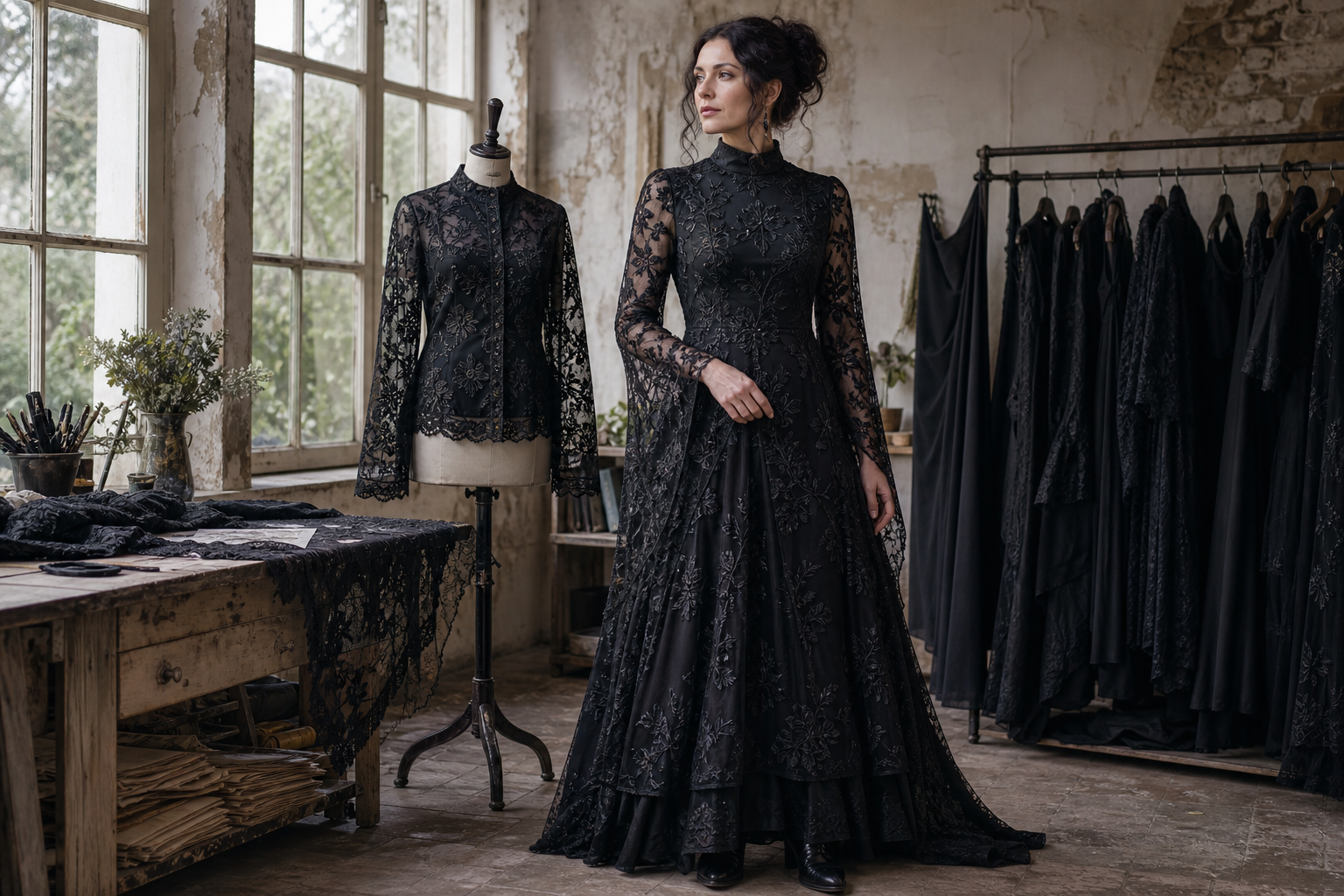
Know what the sample is intended to prove
Before reviewing a sample, confirm its purpose. A first development sample may establish the silhouette, while a later sample may be used to approve final materials and construction. Record any substitute fabrics or trims so they do not accidentally become production references.
Ask which decisions can reasonably be approved at this stage. Metrodress lists a 7–10 day sampling window; confirm the timing for your style, material availability, brief readiness and revision requirements. Treat sample development, courier transit and additional sample rounds as separate parts of the schedule.
Assess transparency and placement consistently
Review the garment under consistent lighting, both flat and on a suitable fit model. Use the intended lining or underlayer when judging coverage. Record whether sheer areas create the effect you want at the bust, waist, sleeves and skirt.
Check lace motif direction, placement at prominent seams and the position of scalloped edges. Compare both sides where symmetry matters, and identify deliberate asymmetry clearly.
Photograph the same views during each review. Specify the location of an issue instead of writing only too sheer; explain the desired result and request suitable options.
Review fit through movement
Measure the sample using the agreed chart before the fitting. Record the sample size and the fit model’s relevant measurements, then assess standing, sitting, reaching and walking where appropriate for the garment.
Check neckline stability, strap position, sleeve comfort and access through the closure. For a fitted mesh panel, record how the seam looks and feels during normal movement. Identify any restriction and the exact position where it occurs.
Separate a fit adjustment from a sewing issue in your comments. They may require different corrections and should not be approved as one general change.
Inspect construction and agree care checks
Look closely at seams, hems, lace joins, lining attachments and areas around closures. Note puckering, skipped stitches, uneven edges or visible damage, and photograph the exact location.
Avoid prescribing a single machine-setting fix from a photograph. Ask the manufacturer to assess the actual materials and construction, then agree how the correction will be checked on the next sample.
Agree an appropriate care-check procedure before testing a sample. Record the method used and compare appearance and measurements afterwards; do not assume that a visual fitting also confirms care performance.
Give approval a clear scope
Return one consolidated review with numbered comments, supporting images and the required next action. Distinguish approved, revise and resubmit, and pending material confirmation.
For each change, state what should be different and how it will be checked. Confirm whether approval covers fit only, colour, materials, workmanship or all of these. Record any unresolved points rather than leaving them in separate messages.
Retain the approved sample reference and the matching specification version. Before bulk production, confirm which sample and documents will govern the order, especially if the final fabric differs from an earlier fitting.