THE PRODUCTION NOTEBOOK
Preparing a Gothic Clothing Tech Pack
Turn your gothic clothing concept into a clear development brief, with practical guidance on drawings, fabrics, measurements, trims and sample approvals.
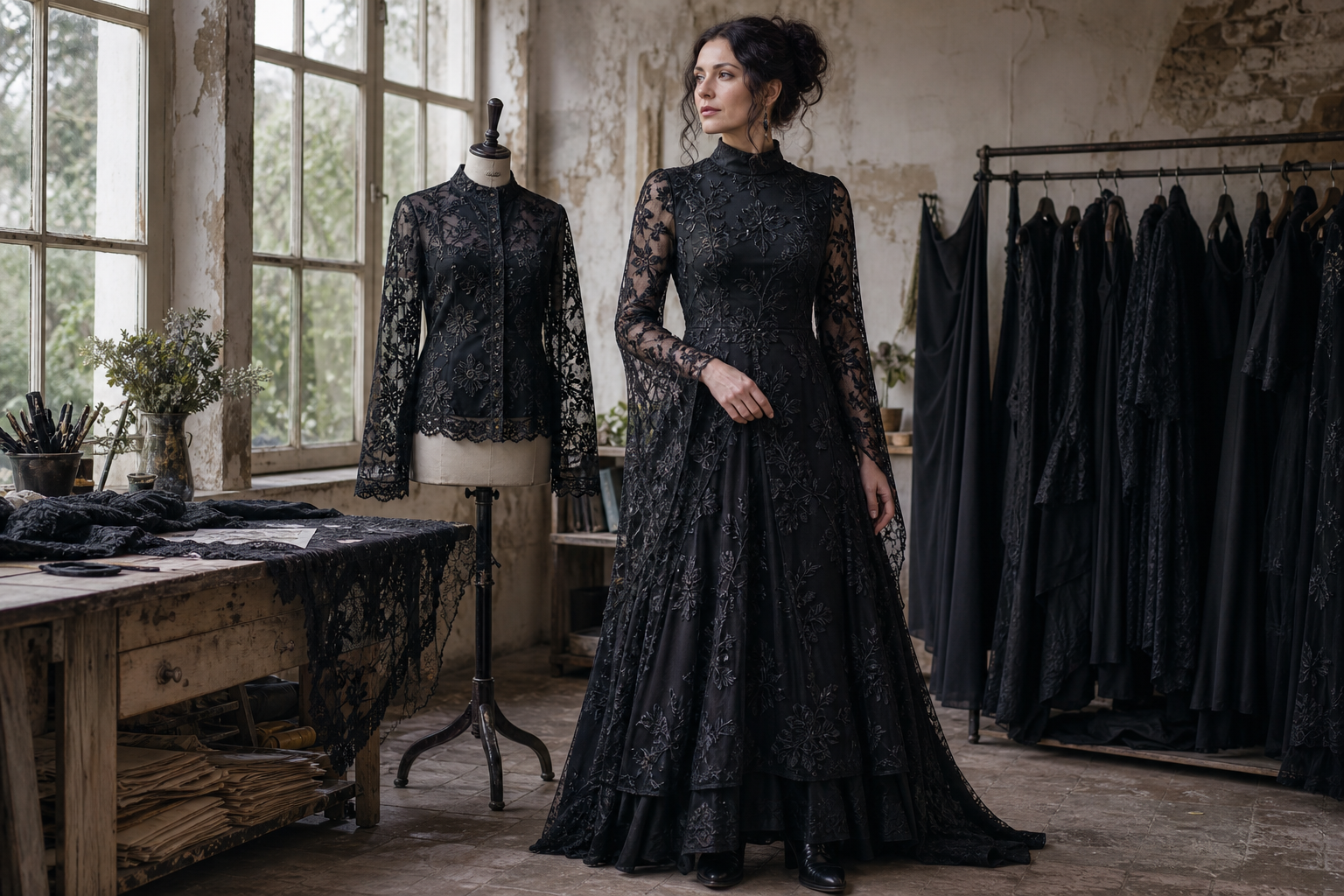
Define the garment before specifying the details
Start with a short description of the product, its intended wearer and how it should fit. Is this a close-fitting mesh dress, a lace-trimmed skirt or a jacket designed for layering? Describe the intended silhouette and coverage, not only the aesthetic.
Separate essential features from details you are willing to adapt. For a corset-inspired dress, clarify whether lacing is decorative or adjustable, and whether the design requires internal support. Do not rely on the word corset to communicate construction. Label reference images with exactly what each one illustrates.
Show every view that affects construction
Include front and back technical drawings, with additional views for details that cannot be understood from those two images. Mark closures, panel seams, pockets, lining boundaries, slit positions and the placement of lace or mesh.
For asymmetric designs, identify the wearer’s left and right. For straps and detachable elements, show attachment points and adjustment ranges. Add close-ups of decorative hardware, lace-up sections and hem finishes.
Keep each note close to the relevant feature. When drawings and written instructions disagree, resolve the conflict before requesting a sample.
Build a usable materials and trims list
List the outer fabric, lining, mesh, lace, elastic, closures, hardware, labels and other components separately. Give each item a reference code and identify where it is used. Include composition and weight when known; mark unknown specifications as questions instead of guessing.
For lace, show the motif scale, direction and any scalloped edge placement. For mesh, describe the required transparency, hand feel and stretch direction. Physical swatches can provide a reference that screen images cannot fully communicate.
Identify acceptable alternatives and which substitutions require approval.
Make measurements repeatable
Provide a base sample size, a garment measurement chart and diagrams showing each measurement point. State the units and whether dimensions are taken flat, around the garment, relaxed or under a defined stretch condition.
Include the measurements that control the design: neckline depth, strap length, waist position, sleeve opening, skirt length and slit height, as applicable. Record target measurements separately from proposed tolerances, then agree practical tolerances during development.
If you already have a size chart or grading rules, include them. If not, request a sizing discussion rather than assuming that a label such as medium defines the fit.
Add commercial information and version control
Finish with the planned quantity, colourways, size range, target launch date and sample priorities. Metrodress lists a starting MOQ of 100 pieces; confirm how that minimum applies to your particular style, colours and order breakdown.
Give the tech pack a style number, revision date and version name. Keep a simple change log so the latest instructions are easy to identify. After each sample review, combine comments into one updated document.
Send the current tech pack with your reference images and unresolved questions to discuss feasibility, sample scope and the quotation together.